The comfort edit · Travel essentials
Travel Neck Support: Comparing Compact Shapes, Covers, and Care
The best travel pillow is not necessarily the largest, softest, or most sculptural. It is the one that fits the way you move, supports you where you need it, and is easy enough to carry—and care for—once the journey is over.
Travel comfort is often decided in the small details: the angle of a head against a window, the gentle sway of a train, the hours spent upright in a cabin seat. A compact pillow can soften those moments, but its usefulness depends on more than plushness. Shape, filling, cover, fastening and care all play a part in whether it becomes a trusted companion or another thing to wedge into an already full bag.
Travel pillows range from familiar U-shaped neck cushions to compact rectangular pillows and contoured supports designed to cradle the head. Each has a different relationship with the body and with the journey itself. Some wrap around the neck; others rest behind the head or provide a small, versatile cushion for a seat, hotel room or lounge. The right choice is personal, and it is worth considering how you actually travel before choosing a silhouette.
This guide looks at the practical distinctions between travel neck support shapes, the materials and covers that influence comfort, and the care habits that help keep a pillow fresh. The aim is not to promise perfect sleep in transit. It is to make a considered choice: one that feels supportive, packs sensibly and suits your routines.
Begin with the journey, not the trend
A pillow that works beautifully in a window seat may be less convenient on a crowded train. A small cushion that fits neatly into a tote may offer welcome flexibility, but it will not necessarily stop a head from tipping sideways during a nap. Before comparing materials, consider where and how the pillow will be used.
- For seated journeys: Think about whether your head tends to fall forward, lean toward a window or drift to one side. The direction of movement can help determine which shape is likely to feel most useful.
- For short trips: A light, compact cushion may be more appealing than a larger structure if portability matters more than extensive coverage.
- For longer travel days: Consider how the pillow will feel after repeated use, whether the cover can be refreshed and how easily the item can be carried between connections.
- For varied settings: A rectangular travel cushion can serve more than one purpose, from supporting the head during a rest to adding a little padding behind the back.
Think, too, about what you are willing to carry. A pillow that feels supportive but occupies half your personal-item allowance may not suit a minimalist itinerary. Conversely, the smallest option may be easy to pack but too slight for the position in which you rest. The ideal balance is not universal; it is the point where useful support and manageable size meet.
A guide to compact shapes
The familiar U-shaped neck pillow
The U-shape is instantly recognisable because it sits around the neck and offers support along the sides. Depending on its height and firmness, it may help limit some sideways movement when a traveller is sitting upright. Its open front and curved profile also make it easy to identify and position.
Fit matters. A shape that feels too wide or tall may push the head forward rather than letting it rest comfortably; one that is too soft may compress without offering much stability. Try to assess how the pillow sits against your shoulders and jaw, not just how it feels in your hands. Some designs include a fastening at the front to help keep the ends together, though a clip is not a substitute for a well-matched shape.
The trade-off is bulk. U-shaped pillows can be awkward to pack inside luggage, and attaching one to the outside of a bag may leave it exposed to the bustle of a terminal. A compact or compressible version can be easier to manage, but compression and recovery vary by construction.
The contoured neck support
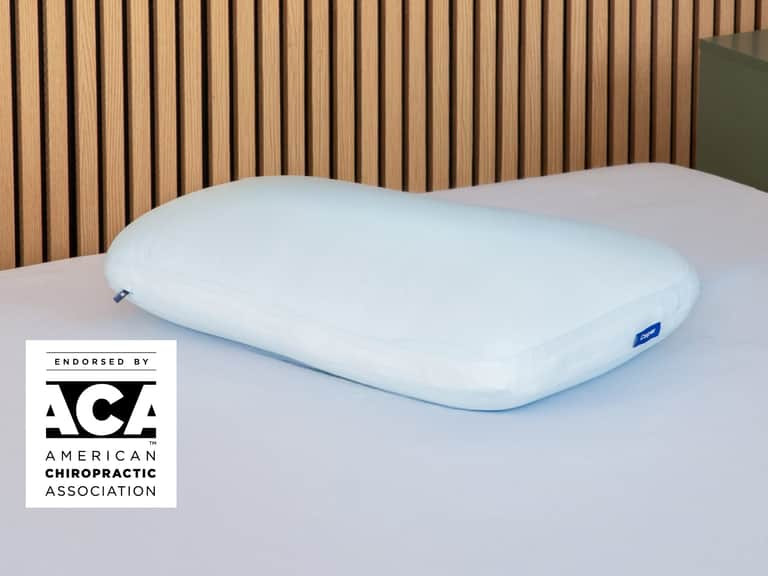
Contoured designs use shaped sections to support particular areas around the neck or head. Some are intended to cradle the nape; others combine a curved profile with a fastening that helps the pillow remain in place. Their appeal lies in a more directed fit: rather than acting as a general cushion, the form is meant to meet the body at specific points.
Because contours differ considerably, labels alone cannot tell you whether a design will work for your posture. Pay attention to height, width and the way the pillow is meant to face. If you often shift positions, consider whether the shape still feels comfortable when you turn slightly or lean toward a seat back. A highly sculpted pillow may offer a precise sensation for one person and feel restrictive to another.
The small rectangular travel cushion
A compact rectangular pillow takes a more understated approach. It can provide a soft surface behind the head or lower back, and its familiar shape may prove useful outside the journey itself. It does not wrap around the neck, so it may be less effective for someone seeking support on both sides of the head. Its versatility, however, can make it an appealing choice for travellers who prefer an adaptable cushion over a specialised form.
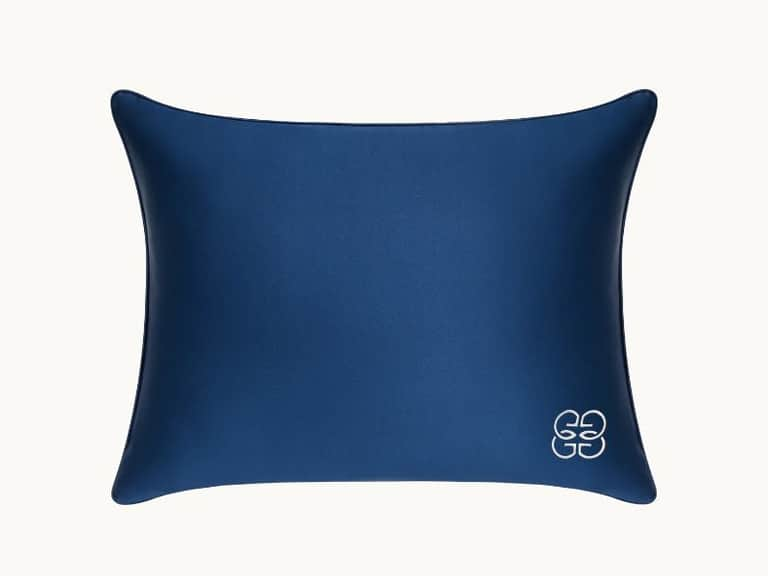
One example is the Silk Travel Pillow – Navy, a compact cushion designed for travel. Its outer surface is 19-momme mulberry silk, while the cushion construction includes a cotton sateen casing and a fill described as long-strand silk wrapped around a polyester core. The product details note that a cushion pad is included and that the pillow is lightweight and packable. This is a rectangular travel pillow rather than a wraparound neck pillow, so it is best understood as a flexible cushion—not as a specialised neck brace or medical support.
The wraparound or scarf-like format
Some travel supports use fabric or flexible material that wraps around the neck, offering a softer alternative to a more structured cushion. Their packability can be attractive, especially for travellers who dislike carrying a bulky accessory. As with any shape, the key question is whether it provides the type of support you actually want. A light wrap may create a pleasant sense of comfort without holding the head in a fixed position, while a more substantial design may take up more room.
Shape, stability and where support lands
Travel neck support is not simply about adding softness beneath the head. Position is central. A pillow that holds the head in an awkward angle can feel less comfortable than no pillow at all, while a compact cushion placed thoughtfully against a seat or window may offer a useful resting surface. If possible, test a pillow while seated in a position similar to the one you expect to use.
Notice how the support meets your body. Does the pillow press against the jaw, rub the skin, or push the head forward? Does it stay in place when you relax, or does it slide away? Can you move your head without having to reposition the whole pillow? These are practical questions, but they often matter more than a long list of technical features.
There is also a difference between softness and support. A very plush pillow may feel inviting at first touch yet compress substantially under the weight of the head. A firmer construction can feel more stable but may seem rigid if its contours do not suit your shape. The most comfortable option is not automatically the softest or firmest; it is the one that provides a pleasant, dependable contact without forcing an unnatural posture.
Fill and feel: what the construction changes
Fill affects how a travel pillow responds to pressure, returns to shape and behaves when packed. Memory foam is often used in contoured neck pillows because it can compress under pressure and recover its form. The feel varies by density and design, and a foam support may be less malleable than a loose-fill cushion. Check whether a particular pillow is intended to be folded or compressed; forcing a shape into a smaller space can affect its construction.
Fiber fills and silk blends can create a softer, more cushion-like feel. Their resilience depends on the specific materials and how the fill is contained. A pillow with a compact profile may be easier to pack, while a fuller one can provide more cushioning but take up more room. If the pillow has a removable inner pad, that detail may also affect how easily it can be refreshed or stored.
Breathability is worth considering, particularly when a pillow rests against the skin for a long stretch. A smooth fabric surface can feel cool and gentle, while a knit or brushed cover may have a warmer, cosier hand. No material guarantees a particular temperature experience for every traveller: cabin conditions, personal preference and the layers worn all contribute.
When reading material descriptions, distinguish between the outer fabric, the inner casing and the filling. A pillow may have a silk exterior but a different material surrounding its fill. That is not a contradiction; it is simply a layered construction. Understanding each part helps set realistic expectations about touch, durability and cleaning.
Covers, closures and packability
The cover is the part of a travel pillow that meets the face, neck or hair, so its texture is more than a decorative choice. Smooth fabrics may feel appealing against the skin; cotton can offer a familiar, breathable surface; and washable removable covers can make maintenance simpler. Look for clear details about whether the cover opens fully, whether it can be taken off without disturbing the fill, and how it should be cleaned.
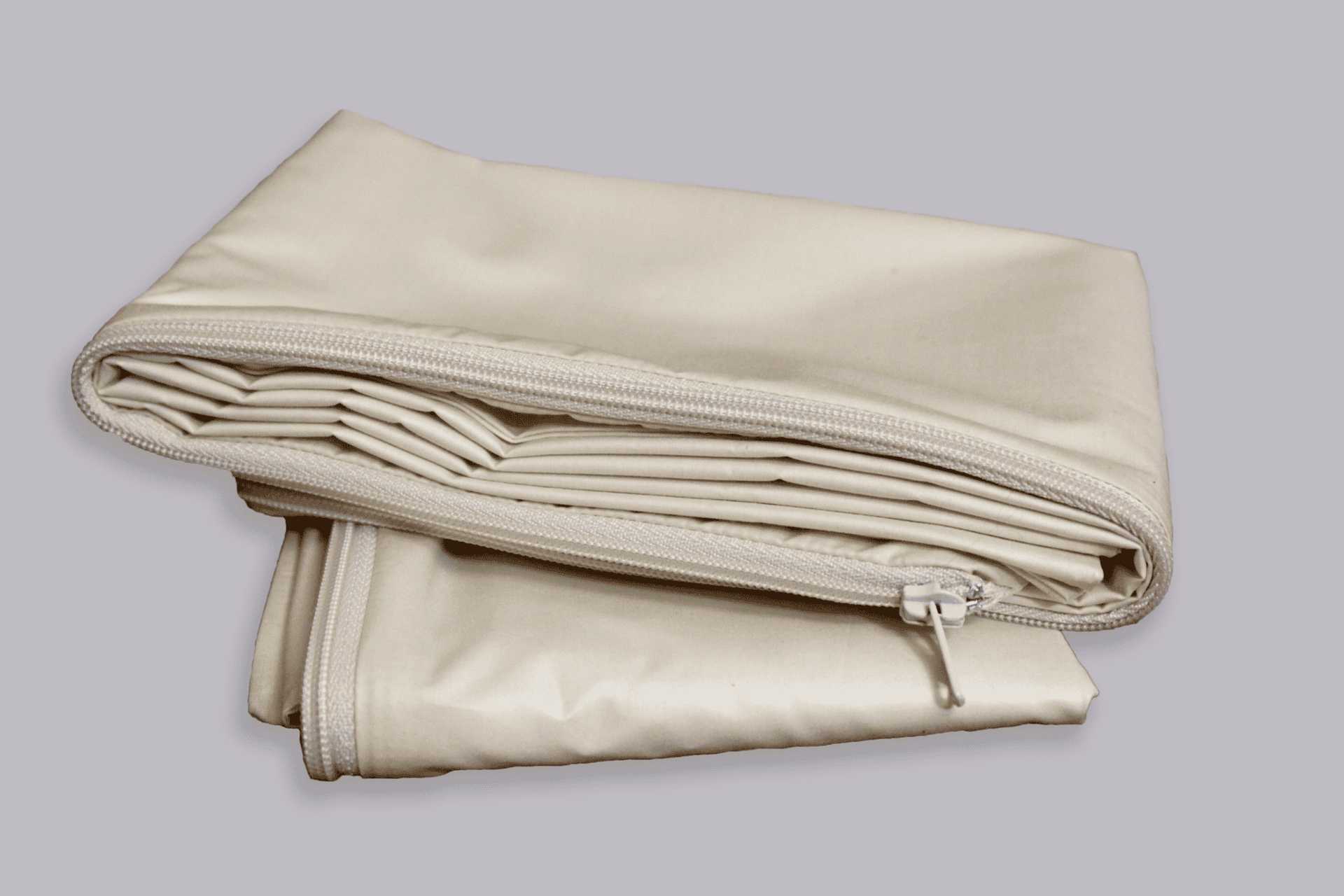
Closures deserve a closer look. A zipper may make a cover easier to remove, while a button or clip can help secure a pillow around the neck or keep an opening closed. Consider whether hardware could press against your skin when you lean back. A fastening should be simple to manage and positioned so that it does not interfere with your resting position.
Portability is shaped by more than the pillow’s dimensions. Ask whether it can be folded, rolled or placed in a case; whether it springs back after storage; and whether you will need a separate pouch to keep it clean in a bag. A pillow that is easy to carry but difficult to compress may be best clipped to luggage, while one that packs flat may suit travellers who want a tidier cabin bag.
For a small cushion, a protective bag can help separate it from shoes, chargers and other items. If a pillow arrives with a travel pouch or laundry bag, consider how that fits into your packing routine. Details like these may seem modest, but convenience is often what determines whether an accessory makes the journey with you.
Care on the road and at home
Travel pillows encounter more than the occasional nap. They may be carried through busy terminals, placed against seat backs and stored alongside everyday belongings. A simple care routine can help keep the cover fresh and reduce the need to wash the entire pillow unnecessarily.
- Read the care label first. Cover and filling instructions may differ. A removable cover may be washable even when the inner pillow is not.
- Separate what can be separated. If the cover is designed to come off, remove it before cleaning and follow its specific instructions.
- Use gentle handling for delicate fabrics. Silk and other fine textiles may require a delicate cycle, cool water, mild detergent or air-drying. Follow the maker’s directions rather than assuming all silk items can be treated alike.
- Keep the filling dry. If the pillow itself is not washable, spot-clean only as directed. Allow any cleaned area to dry fully before storing it.
- Let it air after use. Once home, take the pillow out of its travel bag and allow it to air in a dry place before putting it away.
Do not assume a removable cover means the complete pillow is machine washable. Foam cores, specialty fills and layered constructions may have different requirements. Heat can also be unsuitable for some materials, so avoid ironing, tumble drying or placing a pillow near a direct heat source unless its care instructions specifically allow it.
For a silk travel cushion, the product care guidance should be checked before cleaning. The Navy Silk Travel Pillow details specify a delicate machine wash at no more than 30°C, mild detergent, air drying and cool ironing if needed. As with any textile, it is sensible to check the current care label on the item itself, since product instructions take precedence over general advice.
A practical checklist before you choose
Rather than being distracted by a single appealing feature, compare the details that affect your everyday use. Keep this short checklist in mind:
- Shape: Do you want support around the neck, a contoured cradle or a versatile rectangular cushion?
- Position: Where does your head tend to lean when you rest in a seat?
- Fit: Does the pillow feel comfortable around your neck and shoulders without pushing your head forward?
- Feel: Do you prefer a springy, structured surface or softer, more yielding cushioning?
- Materials: Are the cover, inner casing and fill clearly described?
- Cleaning: Is the cover removable, and are the instructions realistic for how you travel?
- Carrying: Will it fit in your bag, attach securely or come with a suitable pouch?
- Versatility: Could you use it for more than one kind of support, or do you want a specialised neck shape?
The final word on travel comfort
A good travel pillow does not need to make a grand entrance. Its success is quieter: it feels comfortable in the position you use, remains manageable to carry and can be refreshed without complicated rituals. A U-shaped cushion, a contoured neck support and a compact rectangular pillow each answer a different need, and none is the universal winner.
Choose by imagining the real journey rather than an idealised one. Consider how long you will carry the pillow, where you expect to rest, whether you shift positions and how much maintenance you are willing to do. Look closely at the cover and fill, and treat washing instructions as part of the purchase decision—not a footnote for later.
In the end, travel comfort is personal and practical. The best compact support is the one that fits both your posture and your itinerary, offering a small measure of ease without demanding too much space in return.